




 Red wine
 White wine
 Rosé wine
 Primeurs
 Sherry and Port wine
 Sweet wine
 Orange wine
 Vermouth
 Champagne
 Cava
Cava Prosecco
 Lambrusco
 Crémant
 Moscato d'Asti
 Franciacorta
 Pet-Nat
 Corpinnat
 Other sparkling wines
 Rhum
Rhum Gin
Gin Whisky
 Vodka
Vodka Cognac
 Brandy
 Pastis
 Tequila
 Mezcal
 Grappa and Eau de vie
 Calvados
 Liqueurs
 Pacharán
 Apéritifs
 Wine gift boxes
 Boxed wines
 Boxed sparkling wines
 Wine bottles and glasses
 Gift card
 Non alcoholic Wine
 Non alcoholic Sparkling wine
 Non alcoholic Gin
 Other non-alcoholic drinks
 Aromas
 Wine conservation
 Decanters and aerators
 Bottle identifiers
 Corkscrews
 Service
 Glass identifiers
 Cleaners
 Accessories set
 Wine glasses
 Contact

Discovering Mario Rovira, one of the most promising figures in Spanish viticulture
As one of the most promising figures in Spanish viticulture today, Mario Rovira is a young and enterprising, dedicated winemaker. Mario is also a quiet man who knows how to simply listen to and understand the vineyard. Not content with the challenge of just making wine in El Bierzo, he also puts his skills to work in different regions like Jerez and Alella. So, let’s find out a bit more about Mario and his interesting projects that are catching people’s attention.
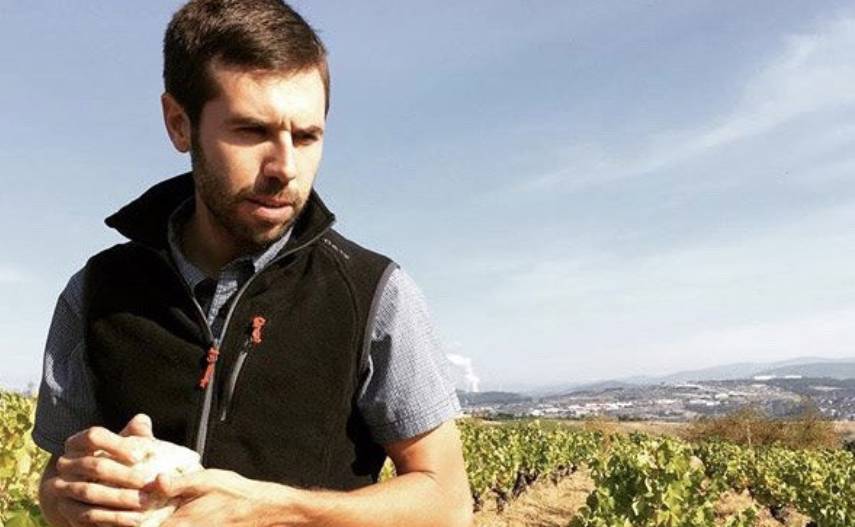
Exclusive interview with Mario Rovira for Decántalo
What does wine mean to you?
For me, wine is a way of life. As a person, I’m quite shy and reserved, so for me, wine is a way of expressing myself, of communicating, a way of relating to the environment and of interpreting what I see and feel in the vineyard throughout the year in a bottle… it is also largely a passion for persevering through the hard times that frost, stone and disease have brought us recently I see it as art, as culture and of course, as a business too. And it’s this last point where, through social awareness and education, we try, as small producers, to make people aware of what it costs today to maintain and run small and family projects like ours.
What is your first memory of wine?
I have many memories of wine, but I think my earliest memory is the taste of the must that my grandmother gave me in a litre bottle. I come from a humble neighborhood in Barcelona and my parents worked late, so I spent the days with my grandparents until my parents came home in the evening to look for me, and there was always a bottle of must at her house. That’s a flavour I will never forget. It was addictive, I remember the fruit, the sugar, the colour of the bottle… the label was horrible though…
What made you decide to spend your life making wine?
By the time I reached university, I was already choosing subjects related to winemaking. We did work experience in a vineyard and made a rosé-style wine as a final project. That’s when the winemaking world really began to catch my attention. So, after studying Agronomy in Lleida, I turned my attention to Oenology and harvesting… but my real moment of revelation was working with Jean Claude Berrouet at Fleur Petrus (Pomerol) during his last year before retiring. There I was able to learn a lot about the rigour and knowledge involved in winemaking… the reasons behind the processes and most importantly: respect, balance and humility, which I think are key in this industry. From there I went to Sancerre, then New Zealand and I ended up in California.
Following your professional training abroad, why did you choose El Bierzo as a home for your wine project?
When I came back to Spain I was very keen to do my own thing, I was 27 years old and I was looking to do something I really cared about, using old vines, native varieties, and lying in a mountainous area, with its altitude, slopes and soils. I wanted to make more Atlantic wines, so I started looking and a good friend invited me to visit Bierzo and I found what I was looking for.
Thanks to the amazing and constant support from my family, I was able to set up the Akilia project, renting my first two plots in December 2010. In 2013, we started buying old vines and we now have 4.5 hectares in the San Lorenzo area (Bierzo). These vines have been cultivated organically since year one and we make every effort to ensure these plots get to express themselves more and more fully in our wines.
We know that you love the Mencía variety. What about this grape do you think sets it apart from other red varieties?
I think it’s a very complex variety… it still surprises me now. Of all our native varieties, I think this one can be interpreted in many different ways and produce very different wines: from young, tense and electric wines to aged wines that develop very well over time.
That versatility combined with the different slopes and orientations in Bierzo makes producing wines a really exciting game where you can create very different wines from a single variety.
The wines made at Akilia, your personal project in Bierzo, have caused a sensation among the tasters of prestigious publication “The Wine Advocate”. What has caught their attention or what do they like most about your wines?
Well, I honestly don’t know, I’ve never talked to them about it but what we try to do in our wines is represent the vintage and represent an area like San Lorenzo, with its altitude and slopes, but most importantly, right from the beginning we wanted to make fresh and elegant wines. To do this, we have always tried to adjust the harvest date, looking for a very specific time between the end of veraison and the beginning of ripening, a very crisp time for the grape, with a very spicy fruit and not too much sugar. We have tried to avoid over-ripening despite the difficult vintages we have had to endure… and these are the things I would like people to be able to appreciate in our wines.
After setting up Akilia, your project in El Bierzo (Castilla y León), you decided to make wines in Jerez (Andalusia) and Alella (Catalonia) as well. How do you manage this unique wine triangle? What made you choose these places to make new wines?
Well, these are three projects that support each other, but the first one I started after Akilia was in Jerez (Sanlúcar de Barrameda) in 2014 in collaboration with a historic Marco de Jerez winery, Delgado Zuleta.
It was a casual and unexpected collaboration because I have been making my Bierzo whites since 2011 with the Palomino variety. In fact the oldest vineyard we have, at 118 years old, is a Palomino vineyard and we created a plot called “Valdesacia”. We met at a fair and, as I tasted their wines and they mine, we decided to work together to make an unfortified cask under a flower veil. We went from that cask to two casks the following year and so on until today, and now we have 7-8 casks and two vats. And with that, the “Tosca” project was born. Now we have three wines; Tosca, Tosca Cerrada and Tosca de Lentejuela that go from less to more intense biological aging but are never fortified.
The Alella project has been a challenge for many years.
I was keen to do something in my area that would have a fresher Mediterranean expression and together with my wife, who I met in Bierzo, we found a 3-hectare plot with an old vineyard facing the sea within the Serralada de Marina natural park, so in 2017 we started pruning and did our first harvest in 2018. It is a big challenge to make wines in Alella with such rapid ripening and the sea so close. We tried to make the granite soil (sauló) and the salinity of the sea our common thread in the three wines that we made in Alella, but we always ended up rushing to make sure the heatwaves in August did not make the grapes lose acidity.
You make wines in Jerez, and the ones you make in Alella have names related to flamenco. Is there a relationship between some wines and others, a common thread that links them? If so, can you tell us what that is?
Well, they are related. We have used Jerez casks from our Tosca project to make the Alella wines. We do part of the aging process in casks for our first white, “La Flamenca”, which is made with Pansa Blanca and Macabeo, and for the single-plot “La Farruca” wine, which is 100% Macabeo, we ferment and age everything in Jerez casks. The names are different styles of flamenco, because we mix varieties from here and casks from the south.
Do you have a favourite wine from one of your projects?
It’s difficult to choose just one because they all have things that I like and that make them unique and different, from the freshness of the 2012 vintage wines to the elegance of the 2016 wines, like Villa de San Lorenzo, or the delicacy of the Villarín 2018. I think the way the Tosca Cerrada 2017 wine develops in the bottle is magical and the Alella wines from my first vintage in 2018, are amazing after a year in the bottle.
But if there was one wine that stands out for its uniqueness and an emotional attachment, it would be the Valdesacia Tinta, which comes from the 118-year-old Valdesacia plot, where all the vines grow Palomino white grapes except for two rows of Mencía. We have only made two vintages so far, and not many bottles, but the credit for this wine goes to a good friend who is no longer with us. He really loved that plot and encouraged me to vinify those grapes separately.
Beyond wine, what are Mario Rovira’s secret and not so secret passions?
Honestly, since I started the Akilia project, I don’t have much free time, I used to read a lot, I drew, I liked the sea a lot, but now when I have time I try to spend it with my family, which is my other great passion, those who put up with me and support me constantly. Without them, none of this would be possible.
As a young winemaker, could you tell us about the challenges you have faced as you’ve developed your projects?
I’ve had so many challenges, from the seed of an idea and finding resources to putting it into action and facing rejection from people when you want to do things differently in a traditional area. That’s what I found most difficult at the beginning. Also the very disparate vintages that we have had in such a short period of time, the increasingly volatile market and now COVID, which presents a great challenge at all levels.
Is there a young wine project like yours that you think we should keep our eye on? If so, why?
There are many small and very interesting projects in Spain at the moment, but I like to drink wines from projects run by young producers in the Marco de Jerez, the electric wines from Galicia, the minimal intervention wines made in Penedés or the Garnachas from Gredos.
Which wine has excited you most recently and why?
Well, at this year’s end of harvest meal in Alella I was surprised by a white wine from Sicily made by Azienda Agricola COS with the Grecanico Dorato variety. It had a touch of contained development, it was saline and mineral, with good acidity and a certain texture… I think after harvesting was also the right time to enjoy this wine.


